
Guide · 7 min read · Updated 15/06/2026
Battery and inverter covers: the complete UK buying guide
Everything UK homeowners and installers need to know before buying a battery and inverter cover: materials, sizing, ventilation, security, finishes and cost of ownership.
What is a battery and inverter cover?
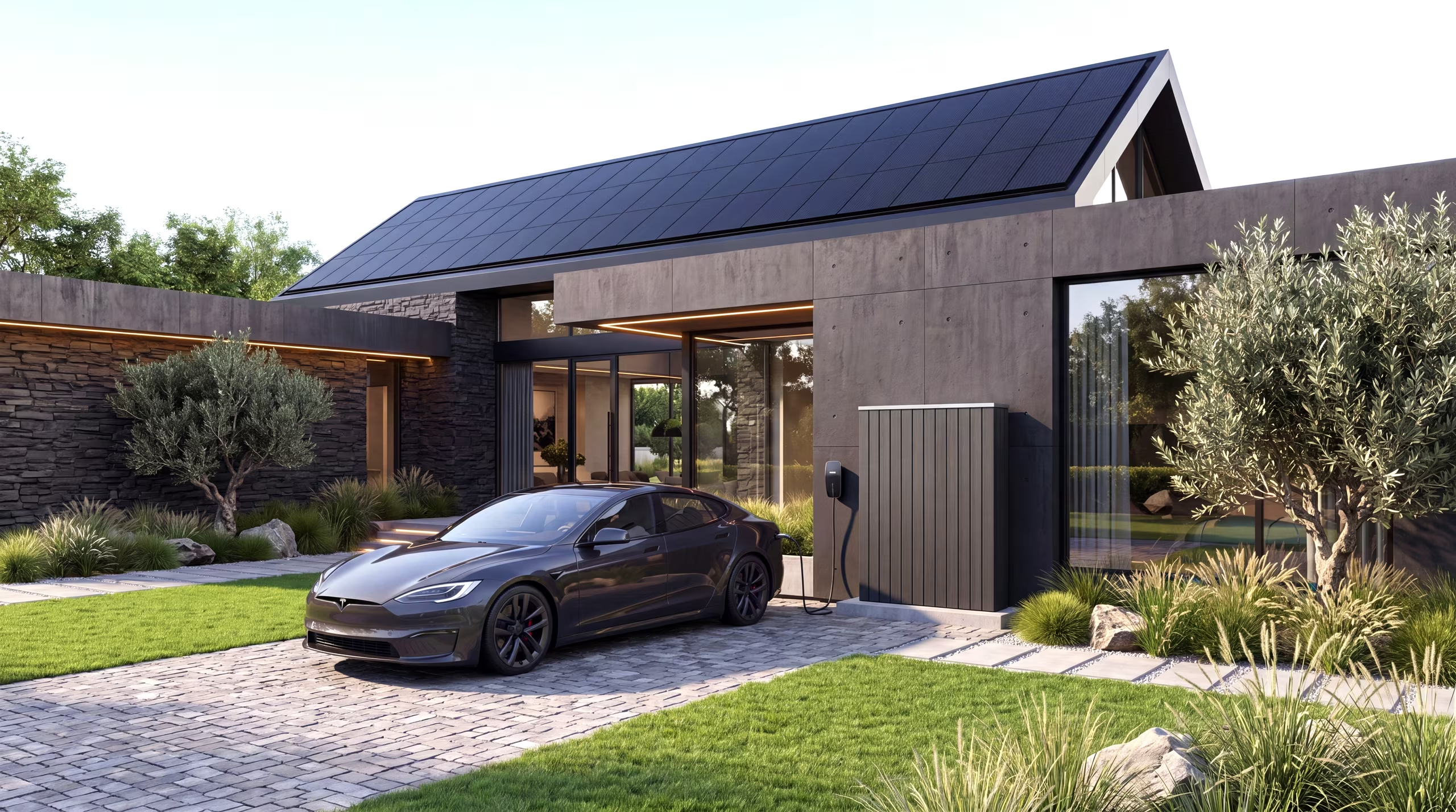
A battery and inverter cover is a purpose-built outdoor enclosure that fits over a wall-mounted home battery, hybrid inverter, isolators and surface cabling. It is sometimes called a solar battery enclosure, battery box or inverter housing. Its job is simple: protect expensive energy-storage hardware from the British weather, keep it secure and make it look like part of the house rather than a cluster of grey boxes and conduit.
Why fit a cover to an outdoor battery?
- Weather protection – shields the installation from driving rain, frost, snow, wind and UV, which can age plastic casings, labels and cable glands.
- Temperature stability – a ventilated, optionally insulated cover moderates the extremes the battery sees, helping it stay closer to its ideal operating range.
- Security – hides high-value hardware from view and, with optional locks, stops casual tampering.
- Kerb appeal – architectural finishes conceal equipment and conduits so the system blends with the property.
Materials: composite vs ACM vs timber
Look for materials that will not rot, warp or rust. Composite cladding on an aluminium frame and lid is the premium choice: it does not rot or corrode and has a tested lifespan exceeding 30 years with no maintenance. ACM (aluminium composite material) cladding is a lighter, more economical option. Untreated timber boxes look nice at first but need regular treatment and can swell, which may restrict airflow and access.
Getting the size right
Covers are specified by internal height, width and depth. Measure the whole installation – battery modules, inverter, isolators and any surface-mounted cabling – then allow working clearance. Solar Trading UK Premium covers are made to order from over 1,500 size combinations (height 500–2400 mm, width 425–2675 mm, depth 240–605 mm); Lite covers come in six fixed sizes. See our step-by-step measuring guide.
Ventilation is non-negotiable
Batteries and inverters produce heat while charging, discharging and converting power. A cover must let that heat escape. Our covers use adjustable ventilation gaps of 30 mm or more that can be tuned seasonally. Read more in do battery covers need ventilation?
Insulation for UK winters
Lithium batteries are less efficient when cold. An optional 25 mm PIR insulation board, integrated within the frame, retains the warmth the battery generates and can improve efficiency by around 10%. See insulated battery covers in winter.
Compatibility with popular systems
Made-to-order sizing means a cover can suit most wall-mounted systems, including Tesla Powerwall 2 & 3, GivEnergy, Fox ESS, SolaX, Sunsynk, Growatt, Pylontech, Solis, Puredrive and Alpha ESS. If you are unsure, send photos and measurements and an engineer will advise.
Finishes
Choose a finish that matches your façade: Walnut, Oak, Cotswold Stone or Anthracite Grey.
Quick checklist before you buy
- Internal dimensions cover the full installation plus clearance.
- Adjustable ventilation built in.
- Rot- and corrosion-proof materials.
- Optional insulation for exposed or north-facing walls.
- Optional locks.
- Easy access for your installer for servicing.
- A long design life and no maintenance.
FAQs
Do I need planning permission for a battery cover?
A wall-mounted cover is normally treated like other small external fixtures and rarely needs permission, but listed buildings and conservation areas have stricter rules, so check with your local planning authority if either applies.
Will a cover affect my battery warranty?
A well-ventilated cover that keeps the manufacturer's required clearances does not interfere with operation. Solar Trading UK covers are approved by leading manufacturers; always keep the clearances listed in your battery manual.
Can an installer still access the system?
Yes. Covers hang on hook plates over wall screws and lift off for servicing once any optional locks are released.