
Guide · 4 min read · Updated 15/06/2026
Purpose-built battery cover vs a garden storage box
Thinking of hiding your solar battery in a garden storage box or DIY timber enclosure? Compare ventilation, safety, access, durability and looks against a purpose-built battery and inverter cover.
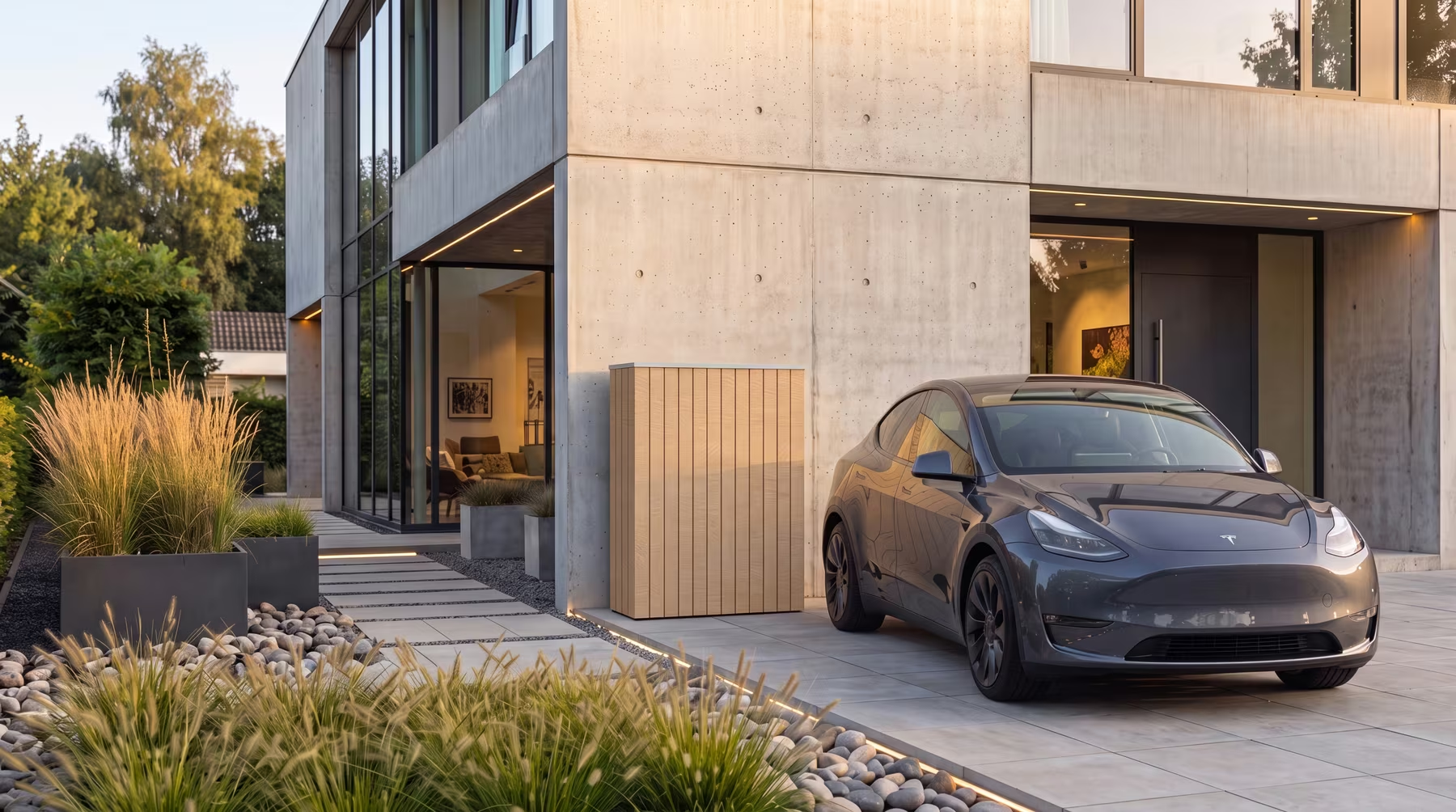
Why people consider a storage box
Plastic garden stores and DIY timber boxes are cheap and easy to find, so they seem like a quick way to hide a battery. But they are designed for garden tools, not live electrical equipment that produces heat.
Side-by-side comparison
| Purpose-built cover | Garden storage box / DIY | |
|---|---|---|
| Ventilation | Adjustable 30 mm+ gaps designed for battery and inverter heat | Usually sealed or improvised |
| Sizing | 1,500+ made-to-order internal sizes | Fixed retail sizes |
| Fixing | Wall-hung on hook plates, lifts off for servicing | Floor-standing, often blocks access |
| Durability | Composite and aluminium, 30-year design life | Plastic can go brittle in UV; timber needs treatment |
| Security | Optional locks secure the cover to the wall | Lid padlock at best |
| Looks | Walnut, Oak, Cotswold Stone, Anthracite Grey | Utility appearance |
| Insulation | Optional 25 mm PIR integrated in frame | None |
Safety and warranty
Manufacturers specify clearances and airflow around batteries and inverters. Enclosing them in an unventilated box can breach those requirements. A cover approved by leading manufacturers and sized to keep clearances is the safer route.
The verdict
A storage box may save money on day one, but a purpose-built, maintenance-free cover protects a system worth thousands of pounds for decades. Compare battery covers
FAQs
Can I put my solar battery in a shed or plastic box?
Only if the manufacturer's clearance, ventilation and temperature requirements are met. Most retail storage boxes are not designed for this, which is why a ventilated, purpose-built cover is recommended.